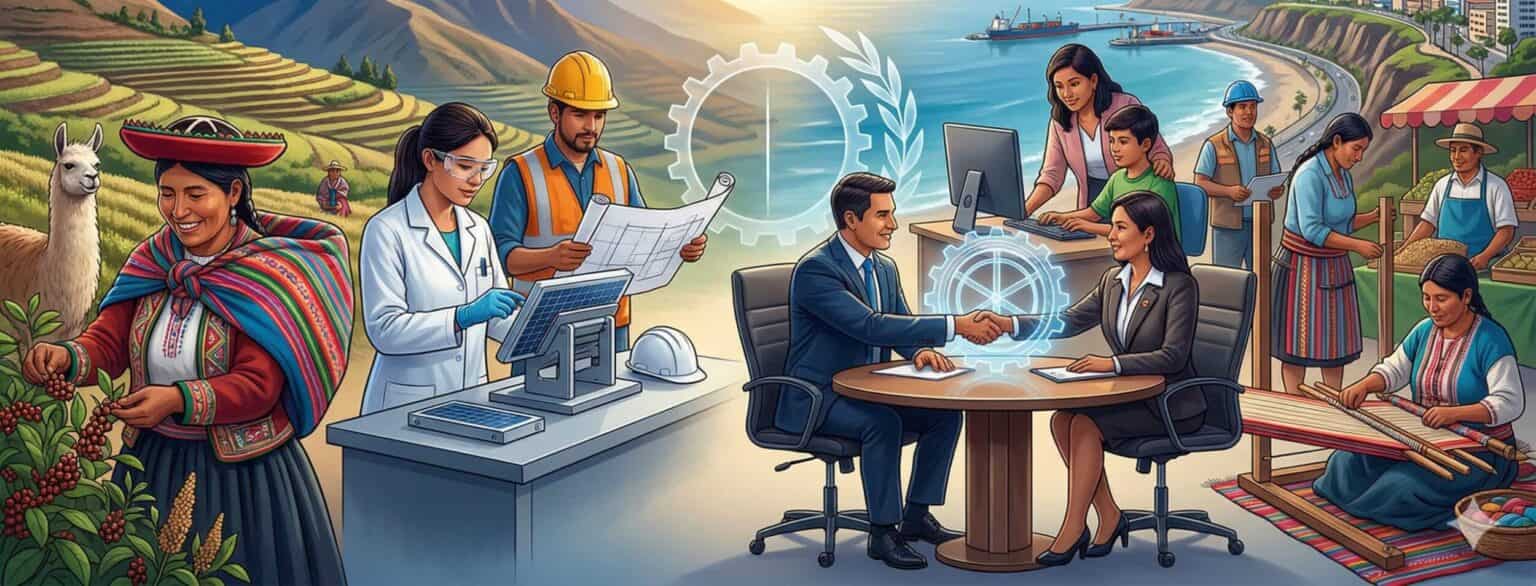

Active labour market policies are widely implemented in Latin America, both to cope with the impact of the economic crisis on labour markets, as well as to improve the way they work. Yet actual results are conditioned by programme designs, by the ability to coordinate them, but also by the appropriateness of the moment when they are applied, i.e. the phase of the economic cycle when these policies are put into effect.
This underscores the importance of conducting studies and evaluations that provide information about actual impacts associated to each of the measures in the different phases of the cycle. This knowledge, in so far as it is systematized and has the appropriate institutionality, will help improve the efficacy of current programmes as well as react on a timely basis in future crises.
+ PDF Download
By prensaoit In General Tags
Public investment is one of the instruments frequently used for counteracting the loss of jobs during economic crises, or to sustain and boost the initial phases of recovery. During the recent crisis, countries of the region increased resources for this by 20% on average. Nevertheless, governments do not usually have the tools for prioritizing projects on the basis of their impact on job creation. In order to correct this absence, the methodology described below aims at including the employment variable in the ordinary process followed in the selection of public works. The aim is to improve the efficacy
of these policies for the creation of new jobs, especially at times when this goal becomes a priority.
+ PDF download
By prensaoit In General Tags crisis, jobs, public investment
During the recent economic crisis, the drop in exports and existence of abundant reserves created opportunities for recovering economic growth and employment through the promotion of domestic demand. Brazil was among the countries that faced the new international circumstances most successfully by implementing a series of policies designed to diversify domestic consumption and
partially offset the fall in exports.
Several Central American countries showed some development of domestic markets, which has helped mitigate the impacts of economic shocks like the most recent one and serves to develop stable grounds for economic growth and job creation in the medium term. This suggests that it is crucial that a more balanced economic strategy between exports and the domestic market be implemented.
+ Pdf download
By prensaoit In General Tags Brazil, Central America, domestic market, employment, Latin America
Essential services for employment seek to strengthen capacities for stable inclusion in the labour market by guaranteeing access to programmes to acquire basic skills, strengthen human capital, and foster greater employability. The right of individuals to access these services does not stem from previous labour contracts; it is a universal guarantee for the entire working-age population.
In a context of economic recovery with job creation, like the one that has already started in Latin America, development of these services is a priority strategy for providing permanent solutions to individuals in great need. Their purpose is to provide a support platform for inclusion in productive labour and create autonomous income. They also serve as a mechanism for moving away from programmes that provisionally relieve poverty by strengthening the capacities of beneficiaries so that they can take advantage of the new opportunities created by recovery.
+ Pdf download
By prensaoit In General Tags employment, Latin America, recovery
The Global Jobs Pact was adopted by countries in response to the global financial and economic crisis as part of an effort to minimize the loss of jobs and strengthen economic recovery with job creation. The United Nations also mobilised its resources to mitigate the social impact of the crisis
through the Social Protection Floor Initiative (SPF-I). This initiative involves the creation and expansion of guarantees that ensure access to essential social services and cash transfers, particularly for the most vulnerable and impoverished.
As the Latin American economies have started to recover, the development of the SPF-I seeks to inhibit the widening of economic and social gaps given the different capabilities of countries to respond to the crisis.
SPF-I is meant to improve strategies for breaking the cycle of poverty, which keeps the population from taking advantage of economic opportunities and making investments to improve their productivity. As such, this initiative involves cash transfers for meeting basic economic security needs as well as the development of essential employment services in an effort to strengthen the ability of working-age individuals to take advantage of the opportunities that come with recovery.
+ Pdf download
By prensaoit In General Tags global compact, Latin America, social protection, United Nations
During the recent financial crisis, unemployment insurance served as a countercyclical measure instrument for nations that had them in place. The benefits of these instruments were reinforced by increases in the duration of benefits and their integration with job retention programmes.
In a phase of economic recovery and employment growth like the one we are experiencing today, there is a need to evaluate the operation of this insurance and the impact of the reforms applied in order to strengthen them and determine which changes are to be institutionalised. The main contribution of unemployment insurance to an economic recovery process with job creation is improved efficiency of the job search process to help workers find positions that match their skills during the time when they receive benefits. Adequate design can contribute to a better fit between job supply and demand by improving the quality of searches for new employment as well as attaining productivity increases associated with better wages in the new job. In this sense, unemployment insurance and active labour market policies should be better coordinated. Developing appropriate and integrated intermediation and training services will allow beneficiaries to take advantage of the new opportunities for productive employment created by an expanding economy.
Countries that have yet to introduce unemployment insurance should consider the possibility of including this insurance in their social protection systems in order to improve their position in a future crisis.
+ Pdf download
By prensaoit In General Tags employment, growth, Latin America, unemployment insurance
Latin American countries faced the recent crisis by extending the coverage of their social protection programmes in order to benefit workers and their families affected by loss of employment and risked falling into poverty. Given the labour market structure in the region, this effort was made in two dimensions: contributive protection instruments for wage-earners, on the one hand, and measures addressed to the informal sector with effect on low-income families, on the other. In the two foregoing areas, the operation of unemployment insurance and the conditional transfer programmes are noteworthy. However, the importance of social protection extends beyond the urgencies derived from the crisis because, together with economic growth and job creation, it is a key tool for driving development and reducing poverty. Consolidating the developments initiated in these years would help to advance towards higher levels of social protection.
+ Pdf download
By prensaoit In General Tags growth, Latin America, social protection
The Latin American countries made deep economic reforms in the framework of the so-called Washington Consensus –intensive trade and financial liberalizations, privatizations, and introduction of fiscal discipline- convinced that stability, economic growth, and greater wellbeing would thus be ensured. The fact is that price-level stability was achieved in the course of the last two decades, but with meagre GDP growth and unstable production, employment, access to credit, and exchange rate. The volatile behaviour of these macroeconomic variables has discouraged capital formation, employment, and productivity in the economies, while financial capital flows have played a key role in this respect. As a result, it is necessary to move from the strong financial and short-term bias of the approach recommended by the Washington Consensus towards an outlook explicitly prioritizing the effect of productive development policies and their impact on equity.
+ Pdf download
By prensaoit In General Tags decent work, Latin America, macroeconomy, productivity
In spite of the negative effects of the crisis on economic activity and employment in Latin America, mean wages underwent real increases driven by adjustments to the minimum wage, in a context of decreasing inflation. This combination sustained domestic demand without affecting employment. In a context of economic recovery, an active minimum-wage policy will be a complement, sustaining consumption by the lowest-income wage-earners, and contributing to growth stability when future increases are in line with increases in mean productivity.
+ Pdf download
By prensaoit In General Tags crisis, Latin America, recovery, wages
In a context where recovery might be slower than expected, it does not appear advisable for governments to abandon prematurely the fiscal and monetary policies adopted to face the crisis. In turn, employment policies can assist recovery, whether with investment in infrastructure as part of a strategy to dynamize local labour markets and small enterprises, or with indirect employment policies at an early phase of reactivation. In addition, increased investment in labour training and in the development of employment services will favour more expeditious and productive rehiring for the unemployed workforce.
+ Pdf download
By prensaoit In General Tags crisis, employment, Latin America, recovery
In times of crisis, social dialogue is a highly valuable tool with which to reach agreement in socioeconomic and labour-related decisions. Establishment of the Free Trade Zone Tripartite Commission of Nicaragua and achievement of the “Tripartite Economic and Labour Emergency Agreement in Free Trade Zones” aiming to contribute to preserving employment and labour stability, was not only useful in that sector but was also replicated in other areas affected by the crisis. Efforts to preserve minimum-wage purchasing power in the current crisis context, and to establish the increase for 2010, were designed to provide a foreseeable framework for such a major issue. The agreement on minimumwage adjustment was combined with other actions such as promotion of a working environment based on mutual respect and respect for labour rights, free agreement on working conditions ensuring working-day continuity or discontinuity, among others.
+ Pdf download
By prensaoit In General Tags Nicaragua, social dialogue, tripartism
Canada has a long experience in the application of work sharing, which is integrated with the unemployment insurance system since 1982. A recent evaluation considers it has been a useful instrument to avert lay-offs, it is mostly applicable in manufacturing and distribution jobs, and has both monetary and non-monetary benefi ts for employers and individuals. On the negative side, it is recognized that these are costly programmes and half of the workers involved were laid off within six months after the end of the programme. During the present crisis enterprises and workers have made use of this instrument. The duration of the benefi t was extended and administrative requirements simplified in order to facilitate access. By mid September 165.104 employees were covered, which can be compared to an estimated 300.000 jobs lost since January.
+ Pdf download
By prensaoit In General Tags Canada, lay-offs, unemployment insurance, work sharing
Unemployment Insurance began to operate in Chile in October 2002, aiming to provide monetary benefi ts to wage-earners upon termination of their work relationship. The innovative design combines a pay-as-you-go fund with an individual savings account arrangement linked to the severance pay mechanism, irrespective of the cause of unemployment. After operating for six years, a set of reforms were implemented in 2009 to improve access to benefi ts, extend coverage, and strengthen the countercyclical role of the plan, by means of additional benefi ts that become available when unemployment levels rise beyond their usual trend. In the framework of a number of measures designed to reduce effects on employment through public expenditure in infrastructure, stimulation of investment, and direct transfers to the poorest homes, together with activation of the Contingency Programme against Unemployment, actual operation shows that protection of unemployed workers has been kept up in spite of a significant decline of economic conditions in Chile.
+ Pdf download
By prensaoit In General Tags Chile, protection, unemployment insurance
Argentina has several contributive and non-contributive programmes designed to address problems associated to the labour market. The international crisis created the need to strengthen and extend such programmes to face the consequences of reduced economic dynamism and consequently the creation of jobs. Whereas some programmes focus on the employed population,2 others address the situation of unemployed persons in order to provide income and, simultaneously, improve employability. The note below discusses the position of two major programmes: “Young People with More and Better Work” (Jóvenes con Más y Mejor Trabajo) and “Training and Employment Insurance” (Seguro de Capacitación y Empleo).
+ Pdf download
By prensaoit In General Tags Argentina, employability, labour market, protection, youth employment
The Contingency Programme Against Unemployment was set up in Chile in 2006, in the framework of the Fiscal Responsibility Law. Its aim was to strengthen the array of counter-cyclical policies which has characterized the design and implementation of economic policies since 2001. This initiative links employment policy to fiscal policy, formalizing the decision to implement counter-cyclical employment policies, funded from general revenue, when the labour market at national level deteriorates. However, it also operates when signifi cant levels of unemployment are detected in particular geographic areas. In the framework of the present fi nancial crisis, the Programme has shown its efficacy, activated during the current year together with a number of other supplementary measures of a counter-cyclical nature. Results suggest positive effects on unemployment, since the latest information is that during the current year, the upward trend of unemployment across the nation was arrested, isolated from seasonal factors.
+ Pdf download
By prensaoit In General Tags Chile, employment, fiscal policy, fiscal responsibility
Since 2005 the Argentine Government has been supporting the organization and strengthening of Municipal Employment Bureaus (Oficinas Municipales de Empleo – OME) through the Ministry for Labour, Employment and Social Security (Ministerio de Trabajo, Empleo y Seguridad Social – MTEySS). These bureaus provide employment services, seeking to inter-relate all active employment policy tools and job opportunities originating in the private sector of the economy, and unemployed persons or persons wishing to improve their work situation. OMEs are technical agencies connecting supply and demand in the area of jobs, furnishing employment-related information and guidance, and free training. Whereas Employment Bureaus fi lled a major role during the period of strong economic growth by retraining beneficiaries of the Heads of Household Programme (Programa Jefes y Jefas de Hogar), in the present crisis they are mostly a way to obtain information and access to various social programmes designed to help increase employability and employment.
+ Pdf download
By prensaoit In General Tags Argentina, household programme, job opportunities, municipalities, OMEs
Argentina has many national government programmes available in response to problems associated with the labour market. The international crisis created the need to strengthen and extend such programmes in order to respond to the consequences of a less dynamic economy. This note describes two cases addressing the employed population2 in an effort to maintain the level of employment. In this way, not only is rising unemployment prevented, but enterprises can keep their skilled manpower while workers maintain their job and occupation. The Crisis Prevention Procedure (Procedimiento Preventivo de Crisis – PPC) and the Production Recovery Programme (Programa de Recuperación Productiva – REPRO) are based on the development of good working relations between the parties and have proved to be innovative and valuable ways to ensure job preservation and fi nancial viability in enterprises during the crisis.
+ Pdf download
By prensaoit In General Tags Argentina, lay-offs, municipalities, prevention
Structural unemployment, together with diminishing job openings during emergency situations or changes in production cycles, cause a fall in income and the wealth of low-income populations. This mainly affects such vulnerable groups as indigenous populations and others requiring priority attention, especially in highly marginal municipalities. To raise the income of these groups in the context of the financial crisis, in early 2009 the Government of Mexico launched the Extended Temporary Employment Programme (Programa de Empleo Temporal Ampliado – PETA). This programme extends the scope of the previous Temporary Employment Programme (Programa de Empleo Temporal – PET) to beneficiaries in rural and urban areas, as the latter currently shows the highest unemployment rate (6.09%). The Programme aims to provide temporary support for the income of these benefi ciaries in times of low job demand, such as the present, and during natural emergencies, by participating in projects for the benefit the community or families, in the area of health care, education, and environmental preservation, among others. With a budget of 2,200 million pesos (equal to approximately USD 165 million), the Government expects to assist 250,000 beneficiaries.
+ Pdf download
By prensaoit In General Tags employment, Mexico, municipalities
The Brazilian minimum wage sets the floor for wages and serves as an important benchmark for the evolution of national earnings and also for pensions and various social benefi ts. The minimum wage is an effective policy for stimulating domestic consumption and, in times of crisis, can help mitigate the effects of recession. In response to the economic crisis, the Brazilian government decided put into effect a minimum wage increase of 12% (6% in real terms) in February 2009 that had originally been scheduled for April 2009. The new minimum wage boosts the Brazilian economy by R$ 21 billion, equivalent to 0.7% of GDP. In Brazil, an increase of the minimum wage implies a rise in income not only for wage earners, but also for pensioners and the unemployed, whose benefi ts are linked to the minimum wage. In recent years, the minimum wage has contributed to reducing income inequality between men and women, and between white and black workers.
+ Pdf download
By prensaoit In General Tags benchmark, Brazil, minimum-wage, recession
The Government of The Bahamas has moved to cushion the impact of the recession on persons who have lost their jobs by paying unemployment benefits under the National Insurance Scheme. This is a temporary financial measure to assist eligible workers who became unemployed and are unable to find employment. Individuals receive US$ 250 every two weeks for a period of 13 weeks (the minimum wage in The Bahamas is US$ 150 per week). In addition to this measure, a collaborative effort between the Government, business community, trade unions, and the Churches will provide training to 1,000 Bahamians, about 10% of the unemployment fi gure. Training will be provided in occupations where there are strong demands from the business sector and where participants are likely to secure jobs.
+ Pdf download
By prensaoit In General Tags Bahamas, insurance, recession, secure jobs
Enterprises in sectors focusing heavily on foreign trade and/or producing goods whose purchase can be deferred over time are most vulnerable in a crisis situation. This has been the case in such industries as automotive and automotive spares, electronics, electrical appliances and capital goods, where the slow-down in production caused industrial activity in Mexico to drop by -11.6% in May. With a signifi cant loss in sales value, such enterprises need to reduce costs and increase liquidity. In this context, designing policies to preserve jobs and human capital at these enterprises is a priority, designed to avoid loss of workers’ income, and also loss of personnel with a high level of knowledge and specifi c skills that are important to these companies. To this end, the Federal Government designed the Job Preservation Programme, which aims to protect employment by strengthening practices to reduce enterprise costs, including shorter working hours instead of lay-offs and partially compensating losses in worker income by means of a subsidy.
+ Pdf download
By prensaoit In General Tags employment, job preservation, Mexico
Following a period of major growth in the Peruvian economy, which had a positive effect on demand for employment, the present economic crisis presents a new context characterized by loss of jobs in specific sectors. The fall in prices and in the demand for metals, raw materials, and garments have had a negative effect on employment at export companies based in the main coastal cities. In addition, such sectors as construction and urban activities in trade and services are experiencing sustained growth of employment. As a result, the Peruvian Government designed the Revalora Perú Programme (Re-value Peru) aiming to mitigate the impact of the crisis on employment. The programme comprises a job-retraining strategy focusing on unemployed workers in the most severely affected sectors, so that, on the basis of their skills and training, they may be relocated and placed in sectors not affected by the crisis. Thus the Programme not only curbs rising unemployment and facilitates rehiring of displaced workers, but also responds to employment demand in emerging sectors.
+ Pdf download
By prensaoit In General Tags crisis, employment, Perú
By interpreting and streamlining existing legislation in terms of unemployment insurance, and combining this with other tools available for training, the Uruguayan Government designed a programme specifically intended to prevent companies affected by the global economic crisis from discharging workers or sending them to unemployment insurance. Simultaneously, the programme helps to prevent human capital at organizations from deteriorating and loss of worker competencies. The programme is based on the legal definition of partial unemployment insurance, used to offset the wage loss ensuing upon reduction of working hours. In addition, it provides a way to utilize unemployed working hours in training activities under collective agreement.
+ Pdf download
By prensaoit In General Tags job preservation, unemployment, Uruguay
In 2008, on the basis of discussions held in the framework of the National Dialogue on Social Security (Diálogo Nacional sobre Seguridad Social – DNSS), important amendments were made to the unemployment insurance and pension regimes. In the case of the former, said amendments strengthen its counter-cyclical character by allowing the duration of the subsidy to be extended in the event of economic recession in the country, while simultaneously improving its focus on particular segments, such as the over-fi fty age group. Although such changes took place in the period prior to the advent of global economic crisis, they can nevertheless show their usefulness to face the present situation, basically by providing greater fl exibility to the above institutions.
+ Pdf download
By prensaoit In General Tags social security, unemployment insurance, Uruguay
Brazilian unemployment insurance was instituted in 1986 and expanded through the 1990s and 2000s. In 2008, 6.7 million workers received benefi ts amounting to an average of R$ 595 (US$ 275), or 1.3 times the current minimum wage (R$ 465). Although programme coverage is relatively extensive when compared with other programmes in Latin America, only 35% of the country’s economically active population are registered wage-earners (known as carteira de trabalho assinada), of whom only fulfi l the minimum eligibility requirements (contributions for at least six months in the last three years).
Benefits are paid for three to fi ve months, depending on the worker’s time in service. In March 2009 the Government announced an extension of the benefi t for two additional months for workers in sectors heavily affected by the crisis (mining, steelmaking) who lost their jobs as of November 2008. Approximately 216,500 workers will benefi t from this measure, equal to 0.013% of GDP.
+ Pdf download
By prensaoit In General Tags Brazil, unemployment insurance
In the face of the economic crisis, Paraguayan authorities have raised allocation of resources and execution of public investments. If all resources allocated to public investment in the 2009 budget were totally executed, the estimated impact created would amount to 16,000 additional jobs throughout the year.
This estimate does not include execution of additional funds from international fi nancial cooperation organizations or bi-national power plants, utilization of which requires approval by Parliament.
To this should be added the effect of a number of measures designed to increase the use of labour
rather than machinery in public investments, via improved access to public contracts for micro and small enterprises and introduction of a routine road-maintenance system. Beyond the current economic crisis, these efforts mean signifi cant improvements in the economic policy of the nation, even though their short-term effect on employment may be modest or diffi cult to measure. In this context, introduction of a system to measure the impact of public investment on employment becomes especially important.
+ Pdf download
By prensaoit In General Tags crisis, Paraguay, public investment
The Brazilian conditional income-transfer programme, Bolsa Família,2 provides fi nancial assistance to 11.1 million Brazilian families –one-fourth of the country’s population– in the amount of R$ 20 to R$ 182 per month, on condition that they meet certain requirements related to the health and education of their children. To face the crisis, the Government decided to raise the programme eligibility ceiling (from R$ 120 per capita to R$ 137), which means that 1.3 million additional families will benefi t. The measure will cost R$ 550 million (equivalent to 0.02% of GDP) and total programme cost will now amount to R$ 12.3 billion or 0.4% of GDP. The Bolsa Família Programme benefi ts can double household income for very poor families. In times of world economic crisis these transfers, besides protecting the income of the poorest families, play a dual role: on the one hand, by encouraging consumption they play a reactivating role in the economy; on the other, by making transfers contingent upon the children attending school, a rising school dropout rate resulting from economic diffi culties is prevented.
+ Pdf download
By prensaoit In General Tags Brazil, conditional transfers, employment
A significant part of the unemployed in Colombia are youth. In December 2008 the number of unemployed aged 14 to 26 was 978,000 –almost half of all unemployed. The rate of unemployment among youth is 22% –more than double the adult unemployment rate. This situation elicited a response in the framework of the counter-cyclical policy of the National Government, which is designed to face the economic crisis and strengthen the nation’s competitiveness.
As a result, the Government proposes to increase job insertion and training with 250,000 new openings intended for young Colombians, a challenge for both the National Learning Service (Servicio Nacional de Aprendizaje – SENA), the national institution for professional training, and the organizations thus given a chance to embark on new projects and hire competent personnel. SENA began offering the new openings for additional training as of May 2009, allocating for this purpose a budget of approximately US$ 150 million.
The policy combines keeping young people in training and fostering job insertion for them as apprentices. One condition to join the programme is that companies wishing to increase the number of apprentices cannot have laid-off personnel for the previous three months. With this plan SENA seeks to reduce the unemployment rate in the 16 to 24 age group by four percentage points, directly impacting the total unemployment rate by close to one percentage point.
+ Pdf download
By prensaoit In General Tags Colombia, youth employment
In Chile, the minimum wage level is adjusted annually, the new levels coming into effect each year on July 1. This year, the adjustment will take place in a context of international crisis resulting in a fall in output, a signifi cant rise in unemployment, and a major drop in the rate of infl ation. While changes in such variables need to be read with care, the particular features of the crisis render it necessary to protect domestic consumption, which hinges mainly on employment and worker income. On the positive side, we fi nd that Chile has consistently reappraised the minimum wage for many years now, which enables it to apply a moderate adjustment without greatly disturbing the minimum- to average-wage ratio or the evolution of productivity, as refl ected in estimates based on three different increase scenarios. Finally, the rate of unemployment must be included as a key variable to determine
the pace of future increases to the minimum wage.
+ Pdf download
By prensaoit In General Tags Chile, crisis, minimum-wage
In crisis situations like the present, many people might feel driven to join the job market in order to obtain an income. This reaction is understandable; however, it could lead to worse circumstances in the medium or long term. The foregoing is the particular case of young people who drop out of formal schooling to look for employment. For the most part, young people who have not completed their schooling will have a hard time fi nding even a precarious job. As they are hardly likely to return to school, starting to work at an early age will only jeopardize their working life and harden the vicious circle of poverty. The purpose of the Avancemos Programme is to encourage young people from poor homes to stay in formal schooling until they have completed the secondary cycle. Although the Programme was designed and started before the crisis, it not only adequately responds to present needs, but also provides a long-term strategy to improve workforce quality.
+ Pdf download
By prensaoit In General Tags Costa Rica, education